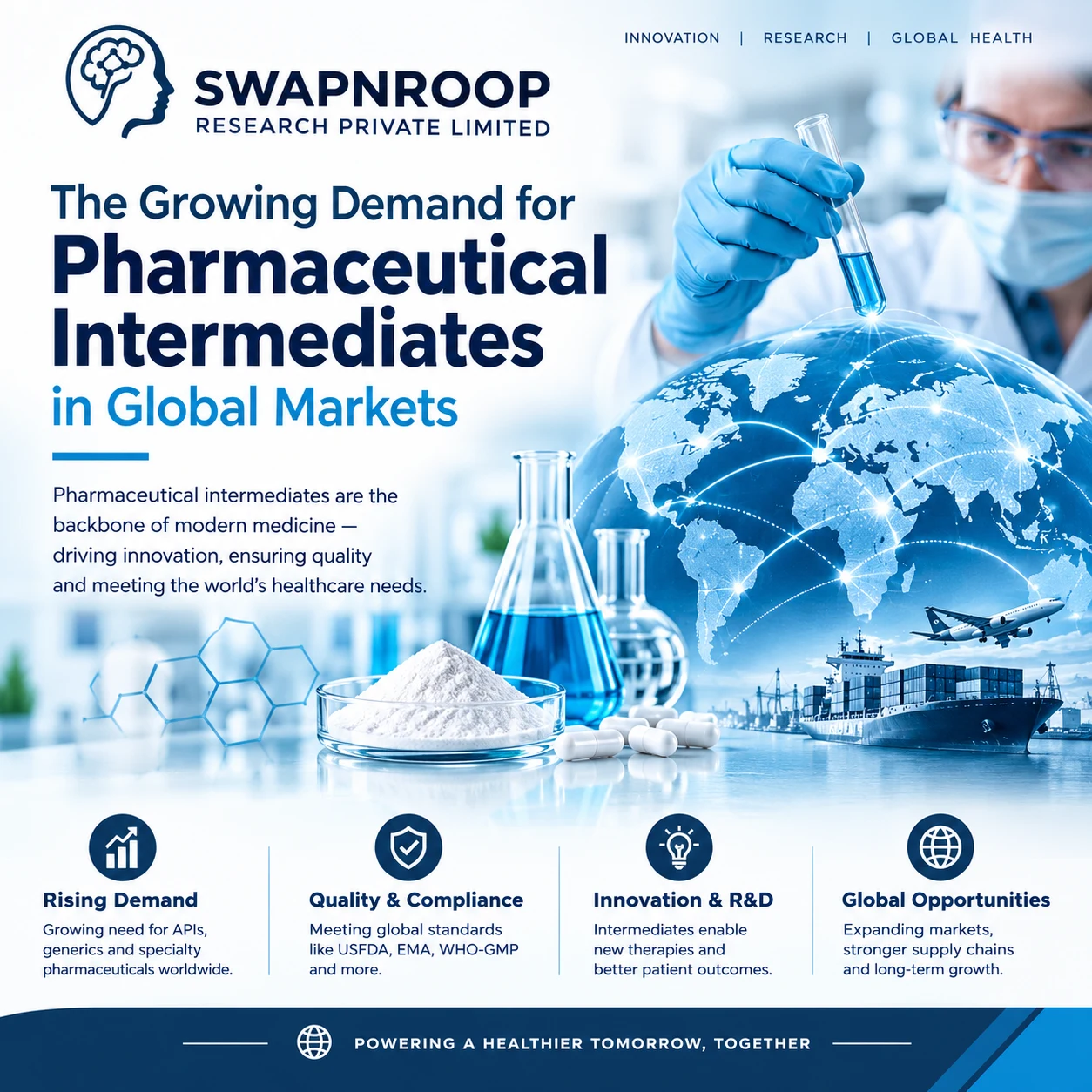
Introduction
The global pharmaceutical industry is undergoing significant transformation, driven by rising healthcare requirements, increasing demand for generic medicines, expansion of pharmaceutical manufacturing, development of innovative therapies, and the need for more resilient global supply chains.
At the heart of pharmaceutical manufacturing are pharmaceutical intermediates—specialized chemical compounds produced during the synthesis of active pharmaceutical ingredients (APIs). Although intermediates are not usually the final medicinal ingredients, they play a critical role in converting starting materials into high-quality drug substances.
As pharmaceutical manufacturers expand their production capabilities across different regions, the demand for reliable, high-quality and consistently supplied pharmaceutical intermediates continues to increase.
For pharmaceutical companies, contract manufacturers, distributors, research organizations and sourcing teams, selecting dependable suppliers of pharmaceutical intermediates has become an important part of maintaining production continuity and quality.
SRPL operates in this evolving pharmaceutical supply ecosystem, providing access to a broad range of pharmaceutical and chemical products for businesses looking to source materials efficiently and reliably.
What Are Pharmaceutical Intermediates?
A pharmaceutical intermediate is a chemical substance produced during the manufacturing process of an API and subsequently subjected to additional chemical transformation or purification before becoming the final drug substance.
The U.S. FDA describes an intermediate as a material produced during API processing that undergoes further molecular change or purification before becoming an API.
A simplified pharmaceutical manufacturing pathway can be represented as:
Depending on the manufacturing process, intermediates may be isolated and purified or may remain within the process without isolation.
Pharmaceutical intermediates can therefore represent important building blocks in the production of medicines used across therapeutic areas such as:
- Cardiovascular medicines
- Antibiotics
- Anti-inflammatory drugs
- Antidiabetic medicines
- Central nervous system medicines
- Oncology products
- Antiviral medicines
- Gastrointestinal medicines
- Respiratory medicines
- Specialty and complex pharmaceuticals
Why Is the Demand for Pharmaceutical Intermediates Increasing?
Several factors are contributing to the growing importance of pharmaceutical intermediates in global markets.
1. Expansion of the Global Pharmaceutical Industry
The global pharmaceutical industry continues to expand as healthcare systems address increasing demand for medicines, generic drugs, specialty treatments and advanced therapies.
As pharmaceutical companies increase API and finished-drug production, the need for upstream chemical materials—including intermediates—also increases.
This creates opportunities for specialized pharmaceutical intermediate manufacturers and suppliers capable of delivering consistent quality and dependable supply.
2. Rising Demand for Generic Medicines
Generic medicines are an important part of healthcare systems because they provide alternatives to branded medicines after applicable intellectual-property and regulatory requirements are satisfied.
Large-scale generic drug manufacturing requires dependable access to APIs and their associated starting materials and intermediates.
Manufacturers therefore need pharmaceutical intermediates that can meet defined specifications while supporting efficient and repeatable production processes. For generic-drug manufacturers, reliable sourcing can help reduce production interruptions and support consistent manufacturing schedules.
3. Growth of API Manufacturing
Active Pharmaceutical Ingredients are the substances responsible for the pharmacological activity of medicines. The FDA defines an API as a substance intended for use in a drug and intended to provide pharmacological activity or another direct effect.
Because intermediates are part of the chemical pathway used to manufacture many APIs, expansion in API production can create additional demand for suitable intermediate materials. This is particularly important for manufacturers producing APIs at commercial scale.
4. Increasing Pharmaceutical Manufacturing in India
India has become an important participant in the global pharmaceutical supply chain, with pharmaceutical products exported to markets across North America, Europe, Africa, Latin America and other regions.
Recent trade data also highlights the importance of bulk drugs and drug intermediates in India's pharmaceutical export ecosystem. According to IBEF reporting based on Pharmexcil data, India's bulk drugs and drug intermediates exports increased by 13.84% year-on-year in Q1 FY27, reaching approximately US$1.36 billion.
This reflects the continuing role of Indian pharmaceutical manufacturing and chemical supply capabilities in international markets. For global buyers, India can therefore be an important sourcing destination for pharmaceutical intermediates and related pharmaceutical chemicals.
The Role of Pharmaceutical Intermediates in API Manufacturing
API manufacturing generally involves multiple chemical transformation stages. A typical synthetic route may involve:
Stage 2: Chemical reaction ↓
Stage 3: Intermediate formation ↓
Stage 4: Isolation and purification ↓
Stage 5: Further chemical transformation ↓
Stage 6: Final API formation ↓
Stage 7: Quality testing and release
Different APIs require different manufacturing pathways, and the number and complexity of intermediates can vary significantly.
The FDA's API manufacturing guidance specifically addresses the production of intermediates, isolation and purification, physical processing and packaging within applicable API manufacturing controls. This makes intermediate quality and process consistency important considerations for pharmaceutical manufacturers.
Key Factors Driving the Global Pharmaceutical Intermediates Market
1. Pharmaceutical Outsourcing
Pharmaceutical companies increasingly work with external manufacturers, contract development and manufacturing organizations (CDMOs), chemical manufacturers and specialized suppliers.
Outsourcing can allow companies to access specialized manufacturing capabilities and expand production without developing every manufacturing stage internally. This creates additional demand for qualified suppliers of:
- Pharmaceutical intermediates
- API starting materials
- Specialty chemicals
- Fine chemicals
- Custom synthesis products
- Research chemicals
- Process chemicals
2. Complex Drug Molecules
Modern pharmaceutical development increasingly includes complex molecules and specialized therapeutic products. More complex manufacturing pathways can require multiple reaction stages and specialized intermediates.
As pharmaceutical chemistry becomes more sophisticated, suppliers with strong chemical manufacturing capabilities, analytical systems and process knowledge can become important parts of the pharmaceutical supply chain.
3. Supply Chain Diversification
Global pharmaceutical companies have increasingly focused on supply-chain resilience, supplier qualification and diversification. Dependence on a limited number of suppliers or geographic sources can expose manufacturers to risks associated with:
- Transportation disruptions
- Raw-material shortages
- Regulatory changes
- Geopolitical events
- Manufacturing interruptions
- Quality problems
- Unexpected demand increases
Diversifying qualified suppliers of pharmaceutical intermediates can form part of a broader supply-chain strategy.
Why Quality Matters in Pharmaceutical Intermediates
Quality is one of the most important considerations when sourcing pharmaceutical intermediates.
An intermediate can ultimately contribute to the chemical structure and quality of an API. Therefore, manufacturers need appropriate controls around specifications, manufacturing processes, analytical testing, documentation and storage.
The FDA's Q7A guidance emphasizes appropriate quality controls and testing for intermediates and APIs, including scientifically sound sampling and testing procedures. Important quality considerations may include:
Chemical Identity
The material should correspond to the required chemical identity and specification.
Purity
Purity requirements can vary depending on the intermediate, manufacturing process and intended application.
Impurity Profile
Understanding impurities can be important for process control and downstream API manufacturing.
Batch Consistency
Consistent production helps manufacturers maintain predictable downstream processes.
Analytical Documentation
Appropriate analytical documentation supports supplier qualification and material evaluation.
Storage and Packaging
Correct packaging and storage conditions can help protect material quality during transportation and storage.
Regulatory Compliance and Pharmaceutical Intermediates
International pharmaceutical supply chains operate within different regulatory frameworks depending on the destination market and intended use.
For companies supplying materials to regulated markets, regulatory preparedness and documentation can be important components of supplier qualification. For example, FDA guidance for API manufacturing addresses areas including:
- Manufacturing controls
- Production procedures
- Quality control
- Sampling
- Testing
- Documentation
- Storage
- Packaging
- Distribution
The FDA also maintains specific requirements for APIs imported into the United States. Foreign establishments manufacturing, repacking, relabeling or salvaging APIs intended for U.S. import generally have registration and drug-listing obligations under applicable requirements.
The exact regulatory requirements depend on the material, its classification, intended use and destination market.
Pharmaceutical Intermediate Suppliers: What Buyers Should Look For
Selecting the right pharmaceutical intermediate supplier requires more than comparing prices. Pharmaceutical procurement teams should consider multiple factors.
1. Product Quality
Check whether the supplier can provide material according to the required specification and analytical requirements.
2. Manufacturing Capability
Understand whether the supplier has suitable manufacturing, processing or sourcing capabilities for the required material.
3. Documentation
Depending on the product and application, buyers may require documentation such as:
- Certificate of Analysis (CoA)
- Safety Data Sheet (SDS)
- Product specification
- Batch information
- Analytical data
- Manufacturing information
- Regulatory documentation where applicable
4. Supply Reliability
A supplier should have the ability to maintain consistent supply according to agreed commercial requirements.
5. Technical Support
Technical communication can become especially important when dealing with specialized intermediates, custom requirements or complex specifications.
6. Packaging and Logistics
The supplier should be able to provide packaging appropriate for the material and transportation requirements.
7. Export Capability
For international buyers, experience with export documentation and international logistics can simplify procurement.
The Importance of Reliable Pharmaceutical Intermediate Sourcing
For pharmaceutical manufacturers, an interruption at the intermediate stage can affect multiple downstream manufacturing activities. For example:
For this reason, pharmaceutical companies often evaluate suppliers based on more than product availability. They may consider:
- Supplier qualification
- Historical consistency
- Manufacturing capacity
- Quality systems
- Documentation
- Lead time
- Logistics
- Communication
- Commercial stability
- Regulatory requirements
Reliable sourcing can therefore become an important part of pharmaceutical production planning.
Pharmaceutical Intermediates and Global Supply Chains
The pharmaceutical supply chain is highly interconnected. A pharmaceutical product sold in one country may involve:
- Raw materials from one region
- Intermediates manufactured in another country
- API production in another location
- Formulation and packaging elsewhere
- Distribution through multiple international markets
This interconnected structure makes pharmaceutical intermediate suppliers an important part of the global pharmaceutical ecosystem. Companies involved in pharmaceutical procurement increasingly need visibility across their supplier networks.
Technology and the Future of Pharmaceutical Intermediate Manufacturing
Technology is changing how pharmaceutical and chemical manufacturers approach production.
Advanced manufacturing approaches can improve process efficiency, reliability and manufacturing flexibility. The FDA identifies advanced manufacturing as an area that can support improvements in quality, efficiency, supply resilience and time-to-market. Emerging areas include:
Process Intensification
Process intensification can combine or improve manufacturing steps to increase efficiency and reduce resource requirements.
Automation
Automation can improve process monitoring, repeatability and production control.
Digital Manufacturing
Digital systems can help manufacturers monitor production data, documentation and quality information.
Advanced Analytical Technologies
Modern analytical techniques can support identification, purity testing and impurity monitoring.
Data-Driven Quality Management
Digital quality systems can improve traceability and documentation across manufacturing operations.
Sustainability in Pharmaceutical Intermediate Manufacturing
Environmental considerations are becoming increasingly important throughout chemical and pharmaceutical manufacturing. Manufacturers are exploring ways to improve:
- Solvent recovery
- Waste reduction
- Energy efficiency
- Water utilization
- Process efficiency
- Safer chemical handling
- Resource utilization
Sustainable chemistry can help manufacturers reduce environmental impact while improving manufacturing efficiency. The challenge is to achieve sustainability improvements without compromising product quality, process reliability or regulatory requirements.
Custom Pharmaceutical Intermediates
Not every pharmaceutical company requires a standard commercial intermediate. Some projects require:
- Custom synthesis
- Process development
- Route optimization
- Scale-up support
- Specialized intermediates
- Non-catalog chemicals
- Research quantities
- Commercial-scale materials
Custom pharmaceutical intermediates can be particularly relevant to pharmaceutical R&D organizations, CDMOs and companies developing new drug candidates. The ability to support both standard and customized requirements can therefore be valuable in the pharmaceutical chemical supply chain.
Pharmaceutical Intermediates for Research and Development
Intermediates are not limited to commercial manufacturing. They are also important during:
- Drug discovery
- Medicinal chemistry
- Process development
- Analytical method development
- Scale-up studies
- Preclinical research
- Clinical development
- Commercial manufacturing preparation
During early-stage development, researchers may require smaller quantities of specialized compounds. As development progresses, the requirement can shift toward larger quantities, greater consistency and more extensive documentation. This creates demand for suppliers capable of supporting different stages of the pharmaceutical development lifecycle.
Why India Is Important for Pharmaceutical Intermediate Sourcing
India has developed a substantial pharmaceutical manufacturing and chemical industry ecosystem. Its role in international pharmaceutical trade is supported by:
- Large pharmaceutical manufacturing capabilities
- Chemical manufacturing expertise
- Generic drug production
- API manufacturing
- Export infrastructure
- Scientific and technical talent
- Established international pharmaceutical relationships
Recent Indian pharmaceutical export data indicates continued growth in bulk drugs and drug intermediates, highlighting the segment's relevance to international trade.
For international buyers evaluating pharmaceutical intermediates suppliers in India, supplier qualification, product quality, documentation, regulatory suitability and supply reliability remain important considerations.
How SRPL Supports Pharmaceutical Chemical Sourcing
SRPL is positioned within the pharmaceutical and chemical sourcing ecosystem, providing access to pharmaceutical products and chemical materials for customers looking for reliable sourcing options.
For companies evaluating pharmaceutical intermediates, SRPL can serve as a resource for exploring product availability and sourcing requirements. Key considerations when working with a pharmaceutical chemical supplier include:
- Product specifications
- Chemical identity
- CAS number
- Purity requirements
- Quantity requirements
- Packaging
- Documentation
- Intended application
- Delivery requirements
- Regulatory requirements
Businesses should always evaluate the suitability of a specific material for their intended application and conduct their own supplier qualification and quality assessment.
Quick Facts
- India's bulk drugs and drug intermediates exports rose 13.84% year-on-year in Q1 FY27, reaching approximately US$1.36 billion (IBEF, based on Pharmexcil data).
- Intermediates sit between starting materials and the final API in the manufacturing pathway.
- Quality controls for intermediates are addressed under the FDA's Q7A guidance for APIs.
What Makes a Pharmaceutical Intermediate Supplier Reliable?
A reliable supplier relationship is generally built around several factors rather than a single characteristic.
Product Availability
Consistent availability can help pharmaceutical manufacturers plan production.
Quality Consistency
Repeatable quality across batches is important for downstream manufacturing.
Transparent Documentation
Clear specifications and analytical documentation support procurement and quality evaluation.
Responsive Communication
Fast and accurate communication can help resolve technical and commercial questions.
Scalable Supply
A supplier capable of supporting different quantities can be useful as projects move from laboratory development to commercial production.
International Logistics
Efficient documentation and logistics are important for cross-border pharmaceutical supply.
The Future of the Pharmaceutical Intermediates Market
The pharmaceutical intermediates sector is expected to remain closely connected to developments across the wider pharmaceutical industry. Several areas are likely to influence future demand:
Increasing Generic Drug Production
Continued demand for affordable medicines can support ongoing API and intermediate manufacturing.
Growth of Specialty Pharmaceuticals
More complex therapeutic products can create demand for specialized chemical intermediates.
Expansion of Pharmaceutical Manufacturing
Increasing manufacturing capacity in emerging and established pharmaceutical markets can create additional sourcing requirements.
Supply Chain Diversification
Pharmaceutical companies may continue evaluating multiple qualified sources to improve supply-chain resilience.
Digitalization
Digital procurement, supplier management and manufacturing systems can make pharmaceutical sourcing more data-driven.
Advanced Manufacturing
New manufacturing technologies may improve efficiency, process control and resource utilization.
Sustainability
Environmental considerations are likely to become increasingly relevant to pharmaceutical chemical manufacturing.
Challenges Facing Pharmaceutical Intermediate Suppliers
Despite growing demand, suppliers face several challenges.
Regulatory Complexity
Different countries can have different requirements for pharmaceutical materials and manufacturing facilities.
Raw Material Availability
Availability and pricing of chemical starting materials can influence intermediate production.
Quality Requirements
Maintaining consistent quality across commercial batches requires strong process and analytical controls.
Logistics
International shipping can involve complex documentation, customs and transportation requirements.
Cost Pressure
Pharmaceutical manufacturers often need to balance quality, supply reliability and commercial competitiveness.
Supply Chain Disruptions
Unexpected manufacturing, transportation or geopolitical disruptions can affect availability.
Successful suppliers therefore need to combine technical capability, quality management, supply-chain planning and customer communication.
How Pharmaceutical Companies Can Improve Intermediate Procurement
Companies purchasing pharmaceutical intermediates can strengthen procurement processes by establishing clear supplier qualification procedures. A practical approach includes:
Step 1: Define the Product Requirement
Specify the exact chemical name, CAS number, required purity, quantity and intended application.
Step 2: Establish Quality Specifications
Define acceptable analytical and quality parameters.
Step 3: Evaluate Suppliers
Review manufacturing capability, documentation, quality systems and supply history.
Step 4: Request Samples Where Appropriate
Laboratory or production teams may evaluate samples according to their internal procedures.
Step 5: Review Documentation
Assess CoA, SDS, specifications and other applicable documentation.
Step 6: Evaluate Commercial Terms
Compare quantity, pricing, lead time, packaging and delivery conditions.
Step 7: Establish an Approved Supplier Process
Qualified suppliers can be incorporated into the company's procurement system according to internal procedures.
Frequently Asked Questions About Pharmaceutical Intermediates
Pharmaceutical intermediates are chemical substances produced during the synthesis of an API that undergo further chemical transformation or purification before becoming the final drug substance.
An API is the active drug substance intended to provide pharmacological activity in a medicinal product. An intermediate is a material produced during the manufacturing process that undergoes further transformation or purification before becoming the drug substance.
They are essential building blocks in many API manufacturing processes and can influence the efficiency, quality and consistency of downstream pharmaceutical production.
Potential buyers include pharmaceutical manufacturers, API manufacturers, CDMOs, chemical companies, research organizations and other qualified industrial customers.
Important considerations can include chemical identity, purity, specifications, analytical documentation, supplier qualification, packaging, quantity, lead time and regulatory requirements.
The regulatory treatment depends on the material, manufacturing stage, intended use and jurisdiction. Requirements can differ between countries and between materials.
India has a significant pharmaceutical and chemical manufacturing ecosystem and is an established participant in international pharmaceutical trade. Recent trade data also shows growth in Indian exports of bulk drugs and drug intermediates.
Yes. Depending on supplier capabilities, customers may source customized intermediates for research, development, scale-up or commercial manufacturing requirements.
Conclusion
The growing demand for pharmaceutical intermediates reflects the continuing development of the global pharmaceutical industry and the increasingly interconnected nature of pharmaceutical supply chains.
From generic medicines and API manufacturing to specialty pharmaceuticals, research and contract manufacturing, intermediates remain important components of modern drug-production processes.
As pharmaceutical manufacturers focus on quality, supply-chain resilience, regulatory preparedness, manufacturing efficiency and global sourcing, the importance of dependable pharmaceutical intermediate suppliers is likely to remain significant.
For companies searching for pharmaceutical chemicals, API intermediates and related products, SRPL provides a platform to explore pharmaceutical and chemical sourcing requirements.
The future of pharmaceutical intermediate sourcing will increasingly depend on a combination of quality, consistency, regulatory awareness, technical capability, supply reliability and efficient global distribution.
About SRPL
Swapnroop Research Private Limited (SRPL) is a pharmaceutical and chemical sourcing company focused on connecting businesses with pharmaceutical products and chemical materials.
Whether you are researching pharmaceutical intermediates, API-related materials, specialty chemicals or other pharmaceutical products, SRPL provides a platform for exploring product information and sourcing opportunities.
Explore Pharmaceutical & Chemical Products with SRPL
Identify materials relevant to your research, development and manufacturing requirements.
Browse Intermediates
